Acquistare una macchina per il confezionamento termoretraibile a buon mercato senza rimpianti: dove si può e dove non si può risparmiare
What a Cheap Shrink Wrap Machine Leaves Out of the Build
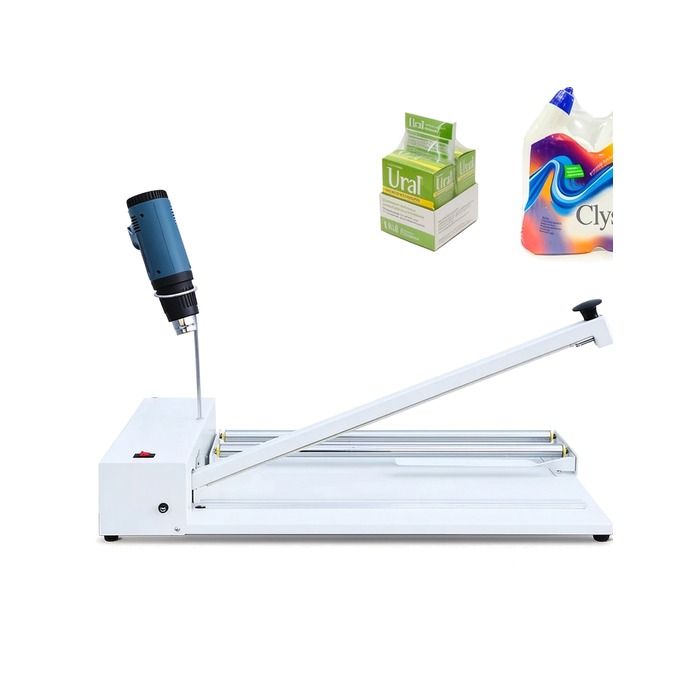
The appeal is obvious: quotes for a cheap shrink wrap machine can land at a fraction of an industrial line’s budget, and for a small workshop testing a new market that gap is genuinely tempting. The risk is equally predictable once you know where budget builders save their money. Nearly every reliability complaint we hear traces back to three components: the seal wire and its gauge, the heater wattage behind the tunnel, and the bearings that carry product through the chamber. None of these show up in a product photo, and all three decide whether the machine runs for five years or five months.
Start with the seal. Thin-gauge seal wire on an L-bar stretches, pits, and snaps under daily production, and a wire that fails weekly converts your savings into downtime and expedited parts shipments. Heater wattage matters just as much: an underpowered tunnel compensates with longer dwell times, which quietly halves your real output versus the brochure figure and cancels the money you thought a cheap shrink wrap machine saved you. Carriage and roller bearings are the quiet failure point — sealed, name-brand bearings cost a factory very little more and outlast unbranded ones many times over.
The frame is the fourth shortcut. Budget machines use lighter steel, which keeps freight and price low but shows up later as vibration at the seal bar and drifting seals. Ask for machine weight in every quotation.
Three Components Where Budget Builders Cut and Buyers Pay Later
None of these shortcuts are visible on delivery day; they surface in month two, when seal cycles drift, or in month six, when a failed heater meets a mismatched spare.
Where a Cheap Shrink Wrap Machine Hides Its Shortcuts
Suppliers rarely advertise what they removed to hit a price point, so the table below lists the places budget builds typically differ from production-grade equipment. Use it as a checklist when you compare quotations — the useful question is not “how much” but “what exactly is behind this number.”
| Component |
What budget builds use |
What production builds use |
| Seal wire |
Thin gauge, basic clamp fitting |
Heavier gauge, quick-change holder |
| Tunnel heaters |
Undersized elements, no airflow control |
Matched wattage with adjustable airflow |
| Bearings |
Unbranded open bearings |
Sealed branded bearings on carriage and rollers |
| Frame |
Thin panel steel, light sections |
Heavier sections, welded and machined |
| Comandi |
Minimal switches, no diagnostics |
Relay or PLC logic with fault indicators |
Some corners are safe to cut, and pretending otherwise wastes your money. A basic relay control box instead of a touchscreen PLC is a reasonable saving for a single-operator workshop. Paint instead of stainless steel is fine for dry, non-food products. A cheaper discharge table is fine when an operator stands at the outfall anyway. A cheap shrink wrap machine becomes a sensible tool when the savings come from these places and the money is redirected toward the seal system and heaters, where failure actually stops production.
There is also a third option between new-budget and new-industrial: a maintained second-hand shrink wrap machine for sale from a production-grade line can cost less than a new cheap shrink wrap machine while offering the heavier frame, better heaters, and proven seal system the budget unit lacks. The condition of specific components matters far more than the age of the badge on the control panel.
Red Flags in a Cheap Shrink Wrap Machine Quote
Walk away from any offer where the seller cannot state seal wire gauge and heater wattage, where “industrial grade” appears without a machine weight to back it up, or where the warranty excludes the sealing system entirely. A supplier who cannot answer component questions before the sale will not answer them faster after it.
When Second-Hand Beats New-Cheap — and When It Does Not
Second-hand makes sense when the machine comes from a known environment, has run a compatible product, and the seller can show service history and remaining spares. It makes less sense when the seal system is visibly worn, when spare parts depend on a brand that no longer exists, or when you need warranty support more than you need a low entry price. Judge the machine, not the price tag.
- Ask what product the machine ran and for how many shifts
- Inspect the seal wire, heater elements, and bearing surfaces in person or by video
- Confirm spare parts availability for the seal system specifically
- Compare the total against a new cheap shrink wrap machine including spares and freight, not sticker against sticker
A Cheap Shrink Wrap Machine Can Still Be a Good Buy
With the right inspection and a supplier who answers component questions directly, a cheap shrink wrap machine earns its place in a small workshop: it proves the market, trains your team, and buys time until volumes justify a production line. Send SWM Machines your product and target output, and we will tell you plainly which corners can be cut on your budget, which cannot, and whether a new budget unit or a maintained second-hand machine is the better bet for your floor.
Articoli correlati
Cerchi un produttore affidabile di macchine per il confezionamento termoretraibile?
Collabora con i nostri esperti interni di produzione e del settore