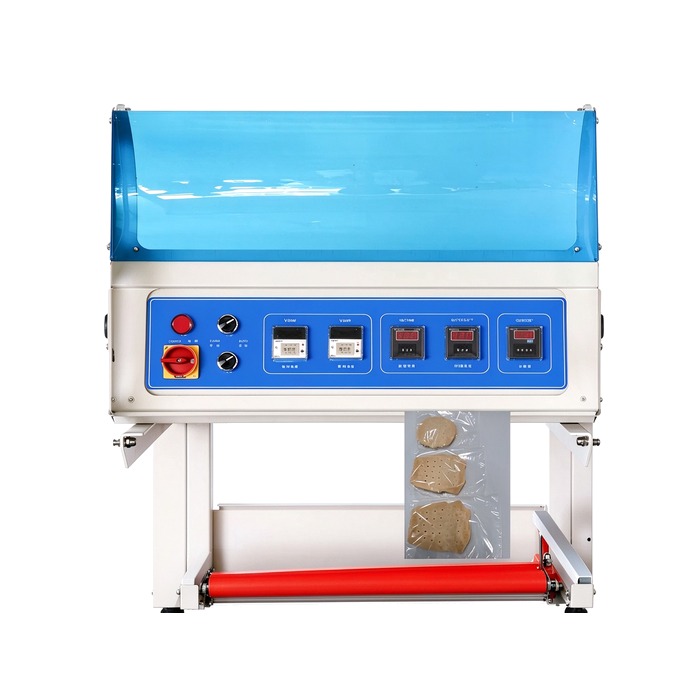
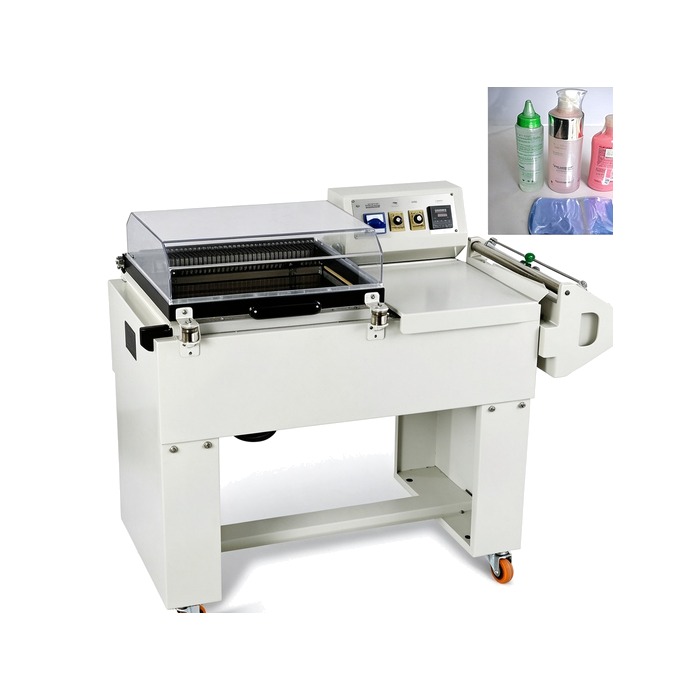
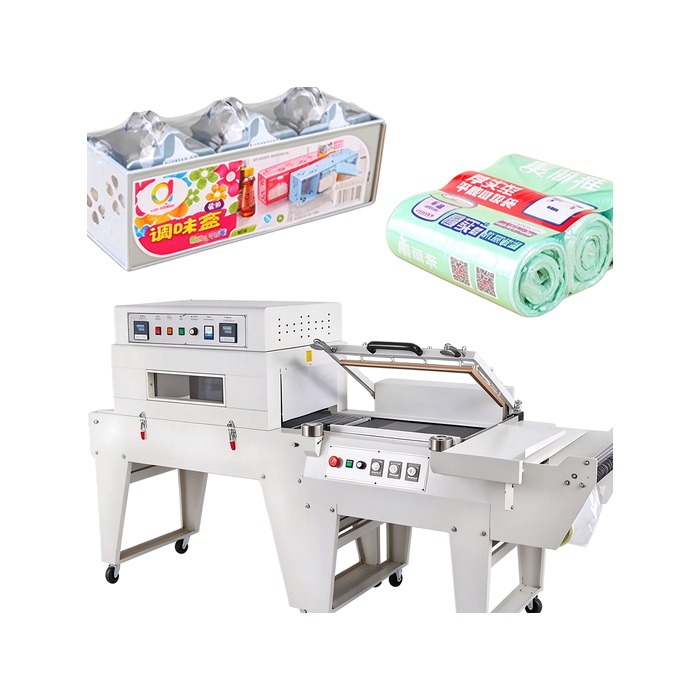
Come utilizzare la pellicola termoretraibile su una sigillatrice manuale senza sprecare pellicola
How to Use Shrink Wrap Without Trapping Air
Most film waste on a manual line is not the machine’s fault. It is air. A pack sealed with a pocket of air inside will balloon in the heat, wrinkle at the seal, and often tear along the fold before it reaches the pallet. Learning how to use shrink wrap well starts with one habit: push the pack down and back into the fold before the bar comes down, so the film sits against the product and the air has somewhere to go.
The second habit is loading the roll with the fold facing the operator. On a center-folded roll the film opens like a book, and the crease should sit at the back edge of the table. Load it the other way and every pack needs an extra hand to keep the web flat, which is exactly when wrinkles appear. If your film is single-wound rather than center-folded, you need a tube former or a sealer designed for it, and no amount of technique will compensate. Roll orientation is the first thing to get right when you learn how to use shrink wrap on any sealer, manual or semi-automatic.
Tension Comes From the Fold, Not the Wrist
New operators pull the film tight with their hands and get a baggy pack anyway. The reason is that pulling stretches the film plastically, so it has nothing left to give when the heat arrives. The correct method is to let the fold do the work: open the film, drop the pack in, and close the web with light downward pressure while the pack holds the film in place. Knowing how to use shrink wrap this way costs nothing and cuts film consumption by a tenth on most manual lines.
How to Use Shrink Wrap on Odd Shapes
Bottles with necks, boxes with handles, and anything with a recess will web film across the gap unless you give the air a path. The practical fix is a small vent: pinch the film at the deepest recess and pull a pencil-sized hole before the pack goes into heat. The hole closes as the film shrinks, and the web that would have bridged the gap collapses into it instead. On multi-packs, nest the units so the tallest point is in the middle, which spreads shrink force evenly instead of loading one corner. Odd shapes are where knowing how to use shrink wrap actually shows, because no machine setting compensates for a web that was never given a path.
| Symptom |
Real cause |
Fix |
| Baggy pack |
Film stretched before sealing |
Let the fold carry tension |
| Seal peels open |
Bar too cool or Teflon worn |
Add 0.3 seconds, replace cover |
| Web across corners |
No vent, air trapped |
Vent the recess before heat |
| Cloudy finish |
Gun held too close |
Hold 6 to 8 inches, keep moving |
| Torn along fold |
Film cooled while still loaded |
Cool flat, never stack warm packs |
How to Use Shrink Wrap Film That Keeps Tearing
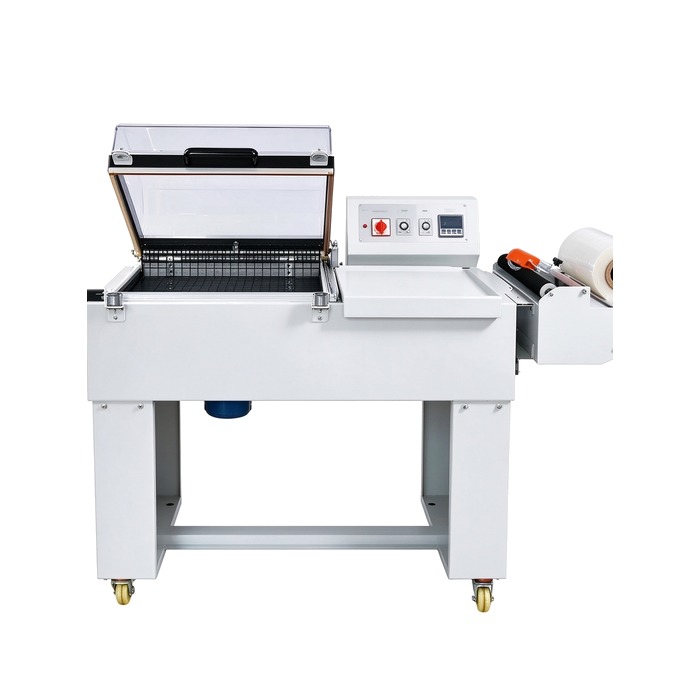
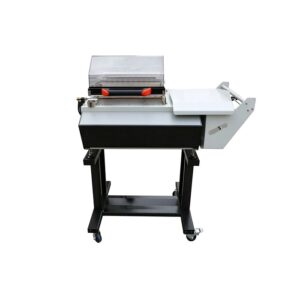
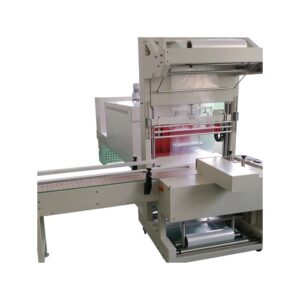
Tearing usually starts at the fold, which is the thinnest point of a center-folded web. Check three things in order. First, whether the pack has a sharp corner pressing into the film; a length of masking tape or a corner board fixes it for cents. Second, whether the seal bar is hot enough to melt through rather than fuse, which shows up as a brittle, whitish seam. Third, whether the film is simply too thin for the pack weight, because a 15-micron film on a 10-pound tray will fail no matter how careful the operator is. When a manual sealer becomes the bottleneck, our semi-automatic side-sealing machine runs the same film at faster cycles.
The Mistakes That Cost the Most Film
Waste compounds quietly. An operator who cuts a tail two inches too long on every pack burns a roll a week more than one who cuts tight, and nobody notices until the film invoice arrives. The same goes for warming up the gun on the pack instead of on scrap, and for sealing without checking that the pack is square to the bar. If you want to see how to use shrink wrap with a real number attached, weigh your film scrap for one shift. Most manual lines find ten to twenty percent going in the bin.
Cut the four habits that generate most of that scrap:
- Measure the pack against the roll width before choosing a film size.
- Seal square, with the pack hard against the fold.
- Trim tails to half an inch, not to what feels safe.
- Keep a scrap pack beside the sealer for gun warm-up and test seals.
How to Use Shrink Wrap at the End of a Roll
The last three feet of a roll behave differently, because the web has less mass to hold heat and the brake tension changes as the diameter drops. Tape the new roll to the old tail and run them through the seal together, then pull the splice out of the finished pack. If you stop to rethread, you lose ten minutes and often a pack. Plan the change at a natural break rather than mid-order, and note the roll length you actually get so the next purchase matches real consumption.
If your operators are still learning how to use shrink wrap by trial and error, a short session with the right film sample saves more than any upgrade. Send us your pack sizes and the film you buy, and we will recommend the gauge, the seal setting, and the machine class that fits the volume.
Articoli correlati
Cerchi un produttore affidabile di macchine per il confezionamento termoretraibile?
Collabora con i nostri esperti interni di produzione e del settore