Shrink Wrap Machine Working Principle: Heat, Memory, and Airflow
Shrink Wrap Machine Working Principle: What Pulls the Film Tight?
Film does not shrink because it is hot. It shrinks because it was stretched cold during manufacture, and the polymer chains were frozen in that stretched position. Heat gives them enough energy to move again, and they relax back toward the dimensions they had before the film was oriented. The shrink wrap machine working principle is that simple: raise the film into its relaxation range, hold it there long enough for the whole sheet to move, then cool it before it can creep back.
The shrink wrap machine working principle also sets a second number: how hard the film pulls while it relaxes. Two figures describe any film on that curve: how much it wants to shrink, and how hard it pulls while doing it. A 19-micron POF might offer 55 to 65 percent shrinkage in both directions; a heavy PE might give 60 percent in one direction and far less in the other. Shrink force is the second number, and it is the one that breaks things. Pull too hard around a corrugated carton and the corners crush inward.
Why Film Has a Shrink Window, Not a Shrink Point
Relaxation does not switch on at one temperature. It ramps, which is why every film has a window: below it the sheet stays slack, above it the surface glazes, the seal weakens, and thin areas tear. For most POF that window sits near 140 to 160 degrees Celsius at the film surface, and for PE it runs higher. Dwell time matters as much as temperature, so a fast conveyor and a hot tunnel can produce the same result as a slow conveyor and a cooler one, until the pack shape changes.
Where Airflow Fits Into the Shrink Wrap Machine Working Principle
Heat alone gives you a uniformly soft sheet. Moving air turns that sheet into a package. Airflow strips away the cool boundary layer sitting against the film, so heat reaches the surface at a predictable rate, and it pushes the softened film into the gaps between products so the bundle locks together instead of floating in a loose bag. Airflow is the part of the shrink wrap machine working principle that operators skip when they tune a tunnel, and it is the reason two machines set to the same temperature finish the same pack differently. A single-zone tunnel with one fan does this adequately on simple boxes and poorly on anything with a handle, a neck, or a recess.
How the Shrink Wrap Machine Working Principle Changes With Film
Every film responds on its own schedule, and the machine has to be set for the film rather than for the pack. Crosslinked POF tolerates a wide window and forgives a slow operator. PE needs more heat and pulls harder, which is why it suits heavy trays and pallet loads. PVC shrinks at lower temperatures, looks glossy, and releases fumes that most US plants no longer want indoors. Switching between them without re-tuning is the fastest way to produce a week of rejects.
| Film |
Shrink window |
Shrink force |
Best use |
| Crosslinked POF |
140 to 160 C |
Medium |
Retail multipacks, print work |
| PE, blown |
160 to 190 C |
High |
Trays, cans, heavy bundles |
| PVC |
130 to 150 C |
Medium to high |
Stationery, gift sets |
| Polyolefin, low force |
145 to 165 C |
Low |
Fragile or printed cartons |
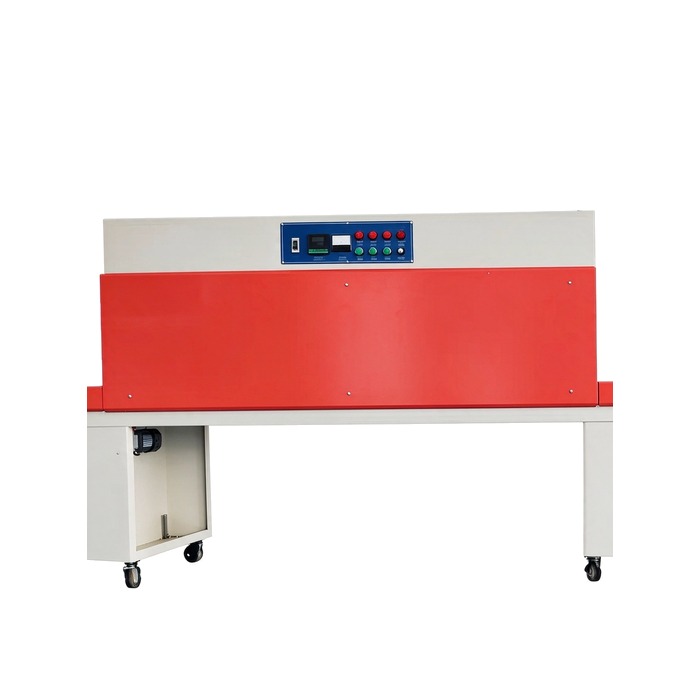
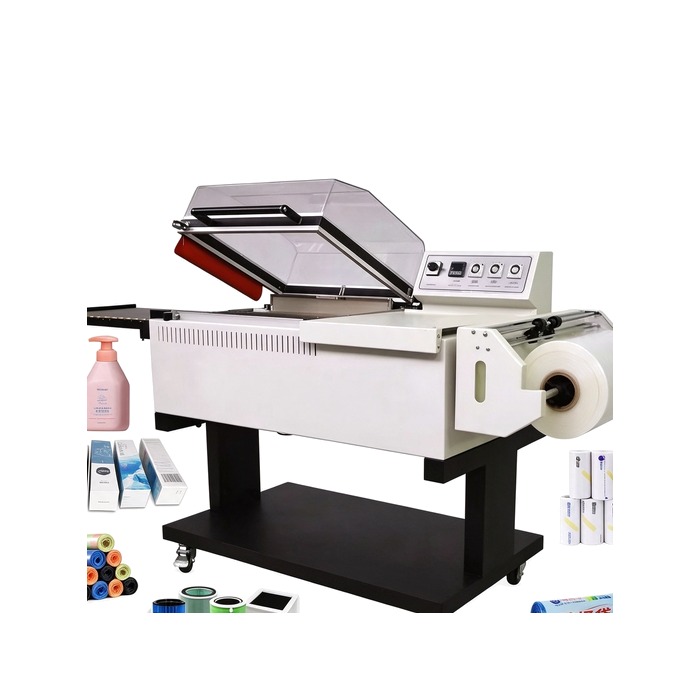
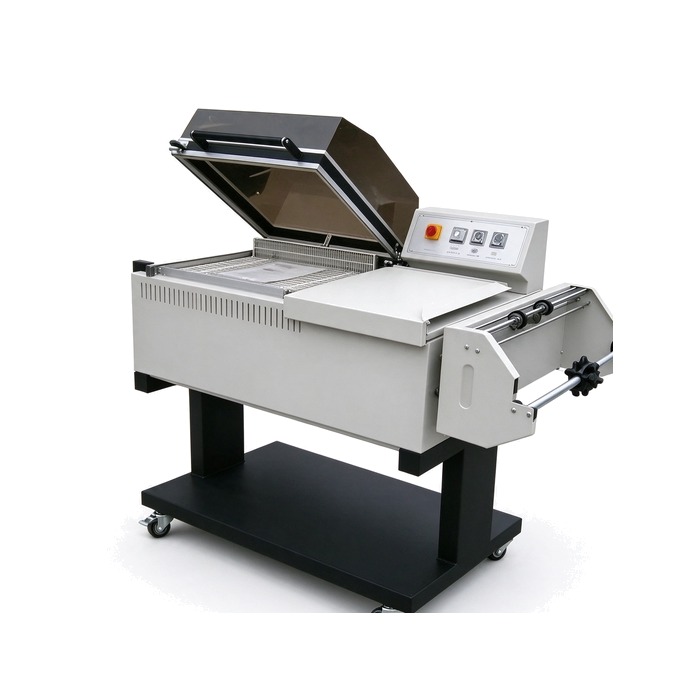
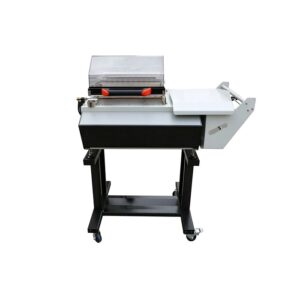
Notice that the window moves with the film and not with the machine. The shrink wrap machine working principle does not change between films, only the numbers do, and a unit bought for PVC rarely runs PE well without a heater upgrade, because the element cannot hold the upper end of the range across a full tunnel width. A compact example of this principle is our chamber type shrink wrapping machine, which runs seal, shrink, and cool in one sealed box.
Why Corners Crush and Prints Blister
Both faults come from the same curve read in opposite directions. Crushed corners mean shrink force exceeded what the carton could take, usually because the tunnel ran hot or the film was a heavy gauge chosen for strength that was never needed. Blistered print means the surface reached temperature faster than the web could move, so the ink and the top layer expanded at different rates. The shrink wrap machine working principle predicts both: force and rate are separate settings even though one dial seems to control everything.
Three adjustments fix most of it:
- Drop tunnel temperature five degrees and lengthen dwell instead.
- Move to a lower-force film before adding mechanical hold-downs.
- Check that the fan is pushing air across the face, not straight down onto the print.
Testing the Shrink Wrap Machine Working Principle on Your Own Pack
Cut a 200 by 200 mm square of your film, mark a 100 mm grid on it with a marker, and put it in a lab oven at the temperature your tunnel runs. Pull it out after fifteen seconds and measure the grid. You now have real shrinkage numbers for the film you actually buy, rather than a datasheet figure for a film you might buy. Repeat at ten degrees higher and you can see exactly where the surface starts to glaze.
That test takes twenty minutes and prevents most of the trial-and-error that follows a new machine install. If you want help reading the results, send us the film spec and the grid measurements. We will tell you what tunnel settings the shrink wrap machine working principle calls for on your specific pack.
Related Articles
Looking for a Reliable Shrink Wrap Machine Manufacturer?
Work with our in-house manufacturing and industry experts